All posts by Andy Henderson

Group report

This is an article published in the Winter 2017 edition of the Hayling Island U3A newsletter...

We arrange four visits a year on behalf of all Hayling Island U3A members. At around this time of year a small committee meets to consider places to visit that should have general appeal. Visits are arranged to venues within a 100 mile radius of Hayling Island. Start times are usually 8:30am from HIADS returning between 5:30pm to 6:30pm depending on traffic.

The visits usually take place in April, June/July, August/September and December. Once dates have been finalised and costs calculated the visits are published on the web site and displayed at the U3A monthly meetings. You do not have to join the Visits 'group' to go on one of our trips. Bookings for visits are limited, and we take bookings on a first-come first-served basis, but (because of issues we've had in the past) we do not recognise a booking until we've received your payment. That means we cannot start taking bookings until we have calculated the cost to members.

Cheques are not cashed until nearer the date of the visit when various payments have to be made.

Visits are available for 50 members although if we have sufficient notice, we can book a 59 seater coach. If visits are under subscribed we reserve the right to offer places to members of other U3A Groups in order to avoid making a loss. Our last visit to Denbies Winery was a case in point and we were joined by U3A members from Havant and Emsworth. Naturally Hayling U3A members have priority.

The easiest way for you to book a place on a visit is to go to the visit page on the web site. Look under the heading ‘Events’ then select ‘Visits” and follow the instructions shown under 'Your bookings' at the end of the description. If 'Your bookings' doesn't appear it means we are still calculating the cost of the trip so can't yet take bookings. You can also book visits at the monthly meetings. We'll have a table set up for this purpose.

You can now make payment by bank transfer using the internet. You need to login to the members' area to see the bank account details. Click here to do that now.

Cheques can also be taken or sent to Debbie Wilsher. To see her address, click here to log in to the members' area.

Visits planned for 2018 are to The Globe Theatre, Borough Market, the Millennium Bridge and Tate Modern in April and Longleat Safari Park and House in June.

A special visit is planned for August. Our destination is Swanage where in addition to sightseeing it will be possible to go sailing on “Moonfleet” a 70 foot Gaff rigged cutter for two hours with the opportunity of some ‘hands on’ experience if desired. There will be two sessions available each taking 12 members. Alternatively you can take a trip to Corfe Castle via the Swanage Railway. The cost of these two activities is not included in the visit basic cost but what is included is dinner in Bournemouth at the Laguna Hotel. As you can see this will be a full day’s outing.

December will carry on what has become a tradition with a visit to a Christmas Market - in Bristol. This will be combined with a visit to Brunel’s “SS Great Britain”.

This year in April we visited Beaulieu and Buckler’s Hard:

Visits1Visits2

Next was Hampton Court in July, followed by a visit in September to Denbies Winery

Visits3Visits4

To finish the year we shall be visiting Salisbury to see the Christmas Market, the Cathedral and other nearby attractions.

We welcome suggestions for visits which should have wide appeal for members.

Patrick Hulls

'Life and times' exhibition

From the visitors' book...

“A fantastic exhibition, so wide ranging, everyone involved should be proud”

“What a wonderful, moving exhibition: congratulations the collection is remarkable”

“Thank you for an inspiring exhibition. Two proud Hayling Islanders”

“An amazing collection! Well done to all”

“A most amazing and enlightening view of our Island”

Review by Derek Dunn

(Derek was chairman at the time)

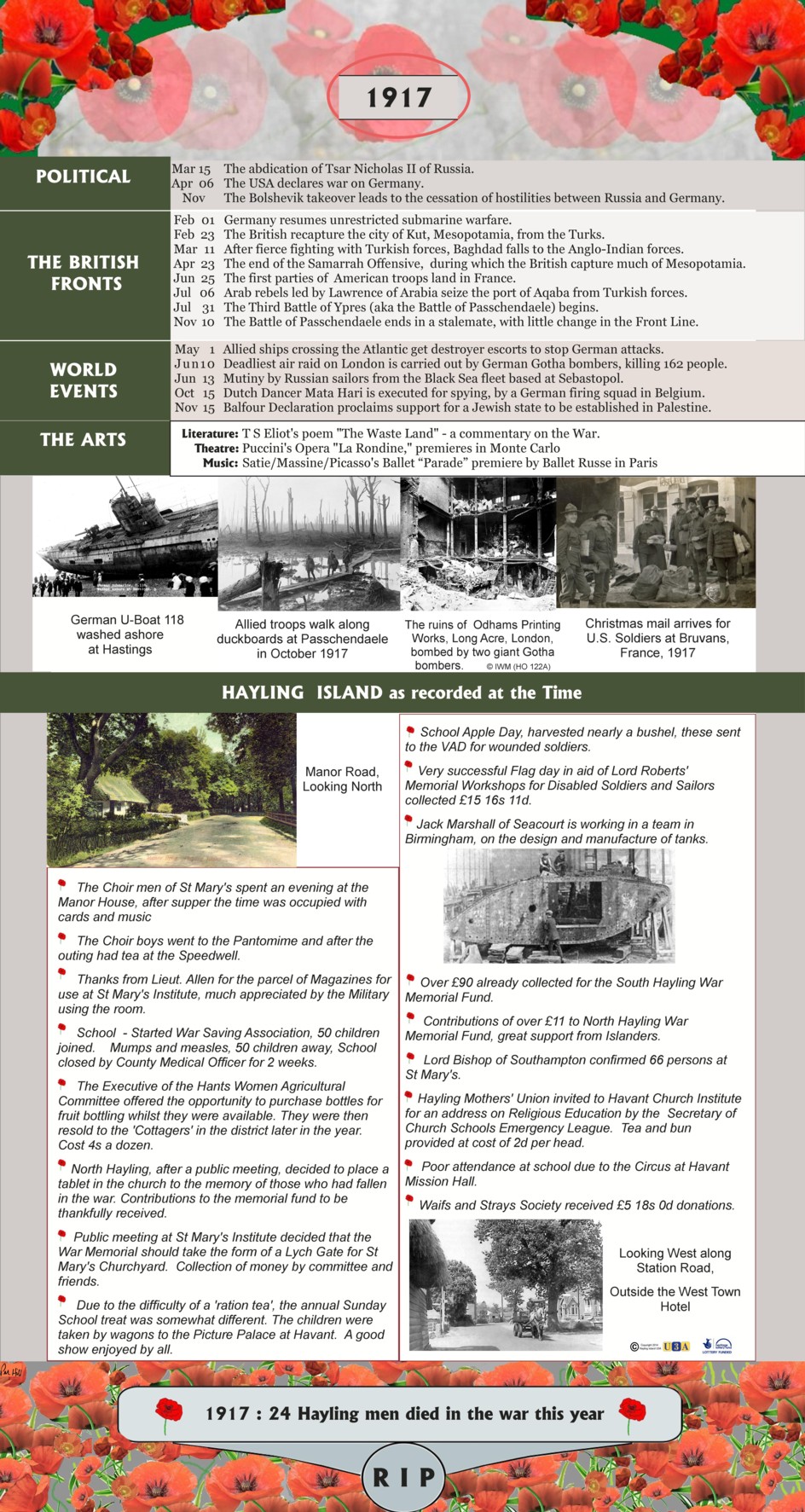
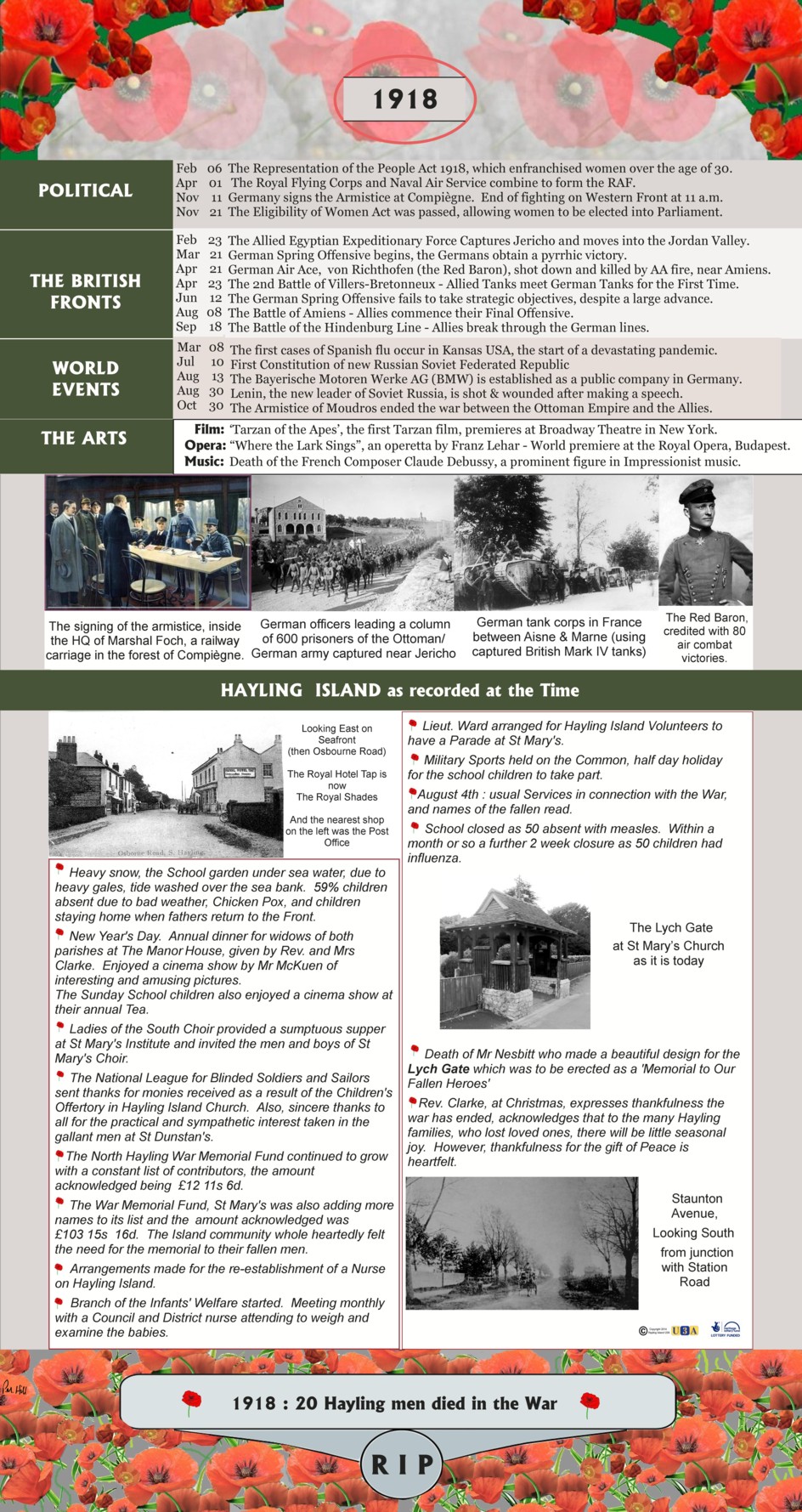
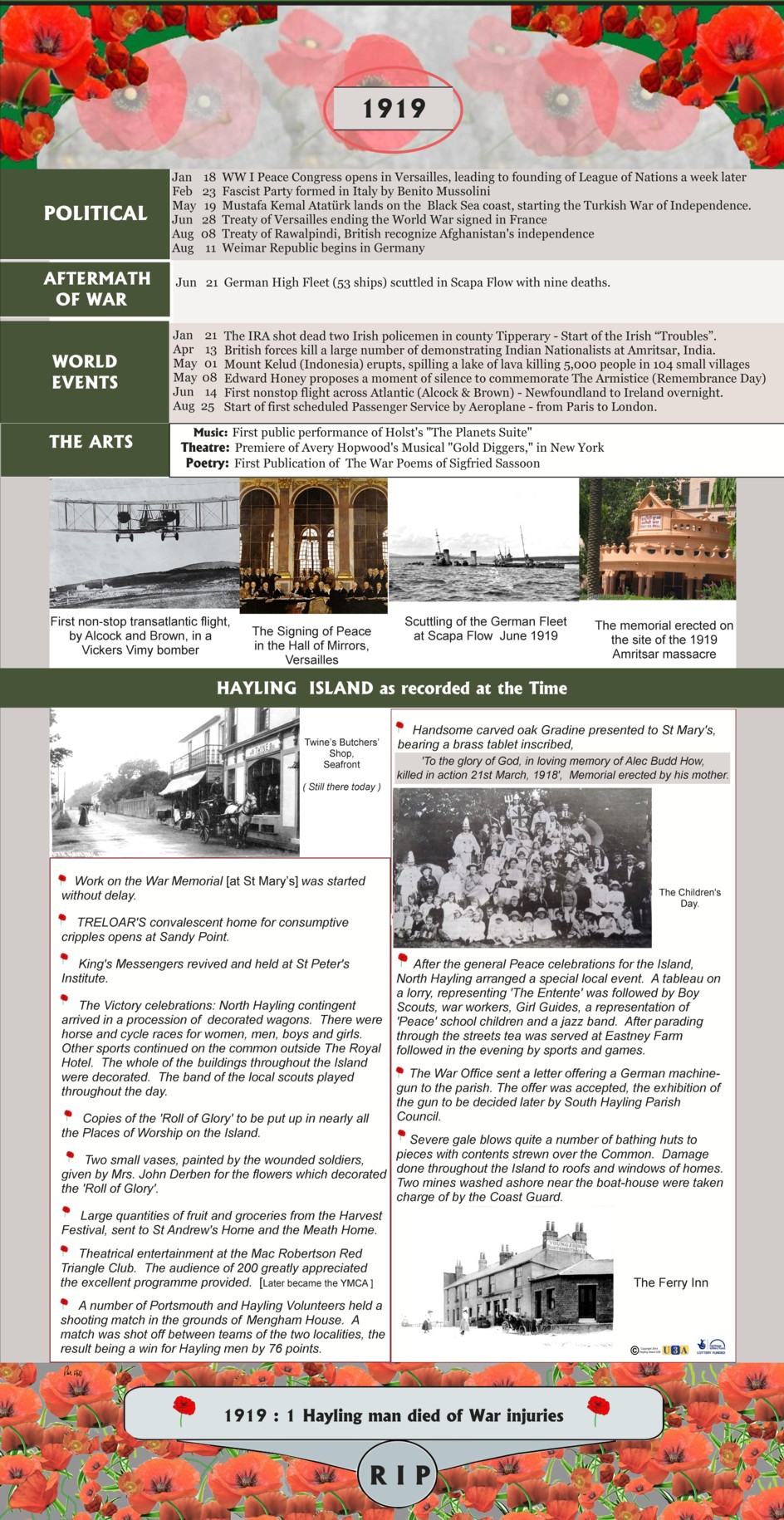
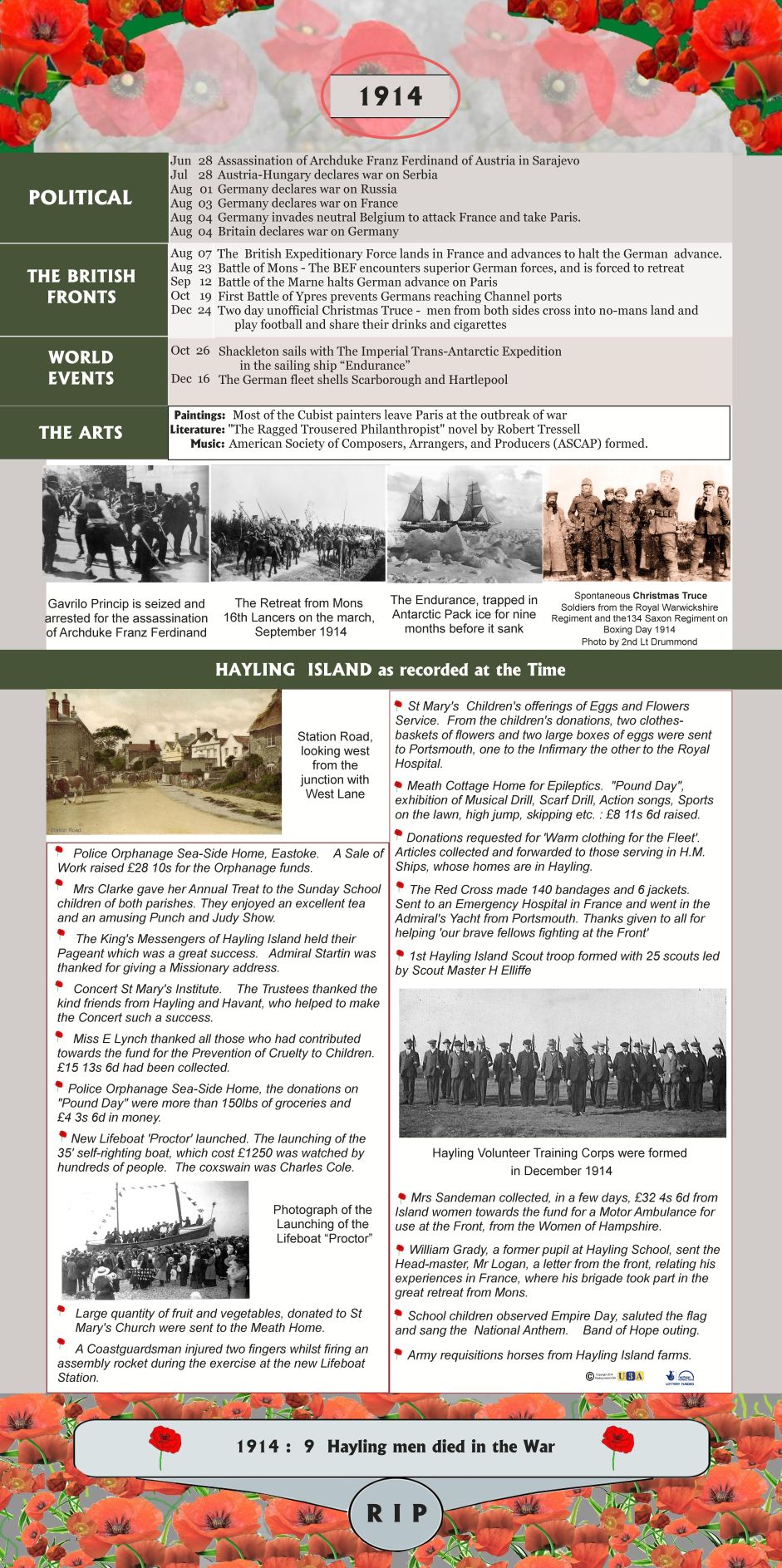
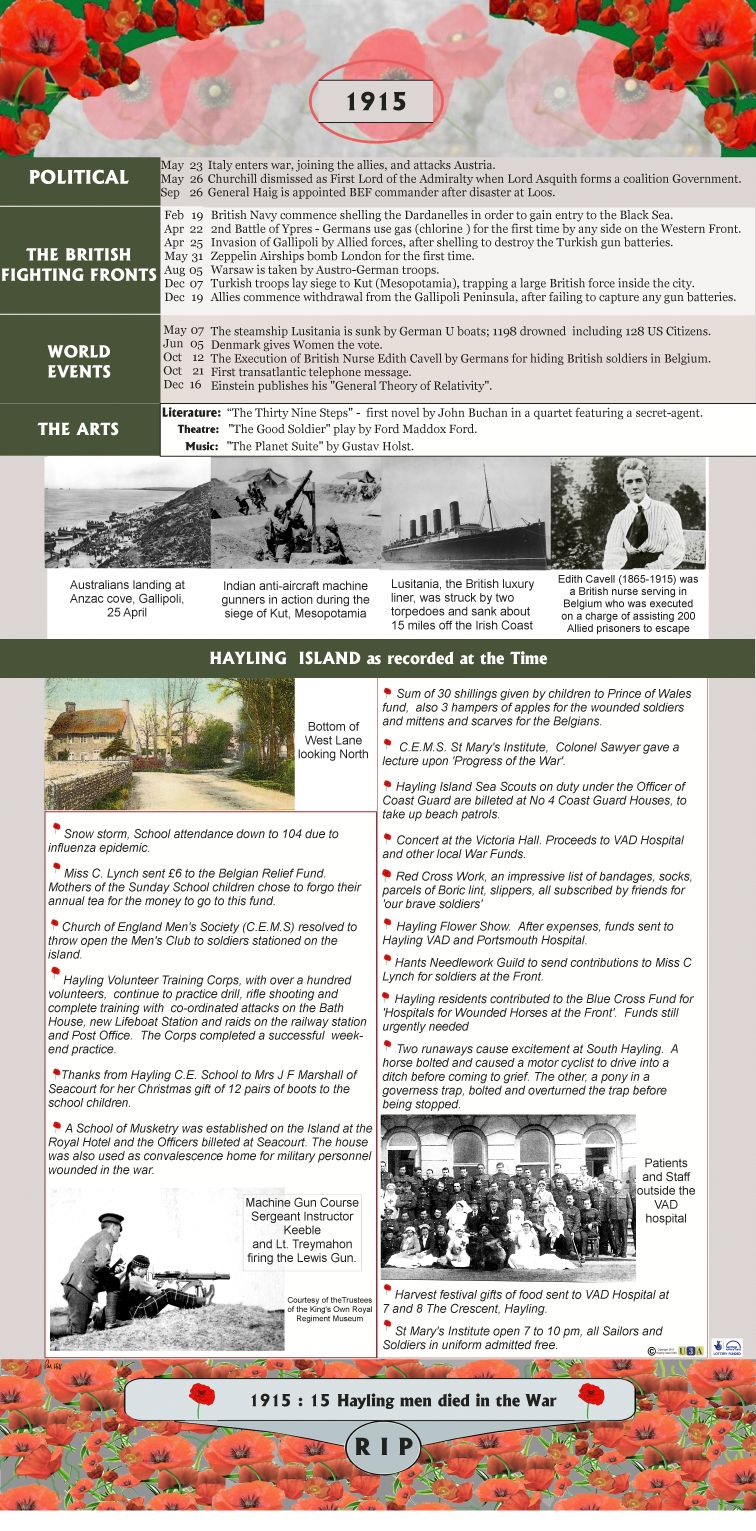
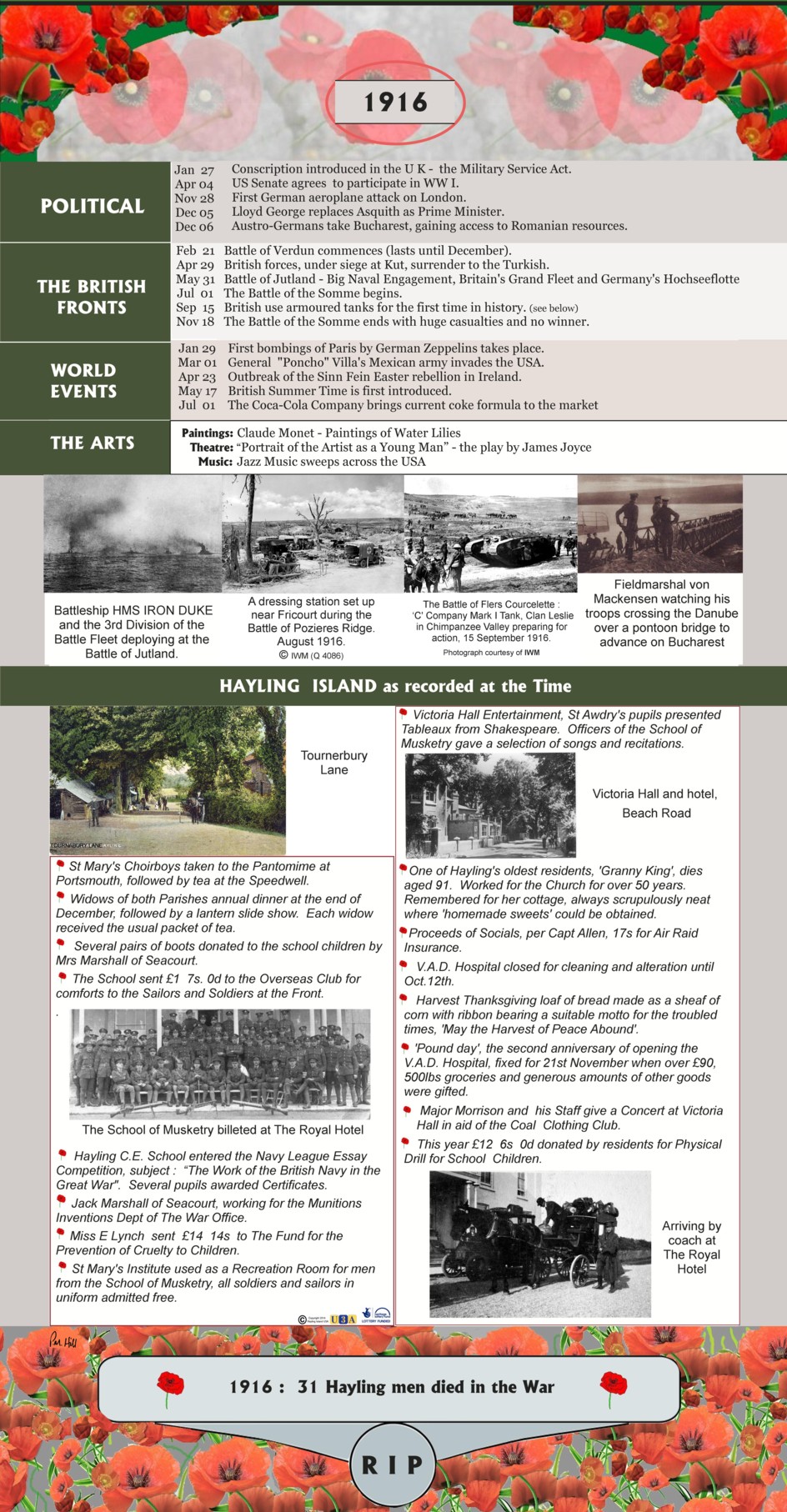
Widely informative, without being overpowering, a set of six of display posters formed a "Timeline", setting out the salient events in each of the War years, formed the information bedrock of the Exhibition.

Exhibition postersEach poster set out, in an attractive and highly readable format, that year’s main world political events; military events on the British front; world events as a consequence of conflict and, quite unusually for exhibitions of this kind, events in the world of the arts. In addition, photographs and information about the life and times of Hayling Island gave an understanding of the impact of the War on local people.

Colourful, attractive and fascinating, a nearly lost world recovered and recounted on six excellent displays.

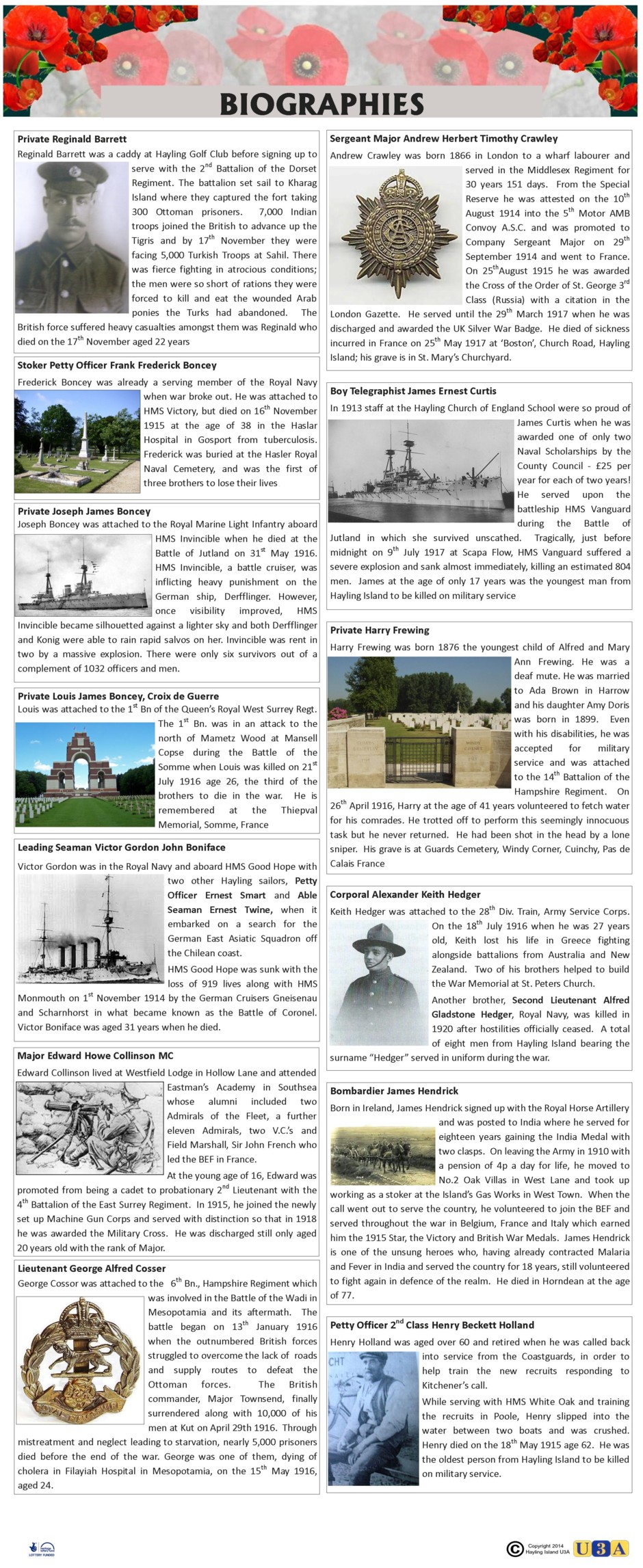
At one end of the room was a poignant list of the casualties, with a few illustrated and fascinating biographies; and, happily, a much longer list of those who served and who returned. Although the impact on them in the aftermath of war, in terms of physical and mental damage, cannot be measured and, with but few exceptions, will never now be known. Indeed one visitor told me that following WWI service one of her grandfathers “self-medicated with alcohol” and that the family was ashamed of him until they realised the mental and physical suffering he had endured.

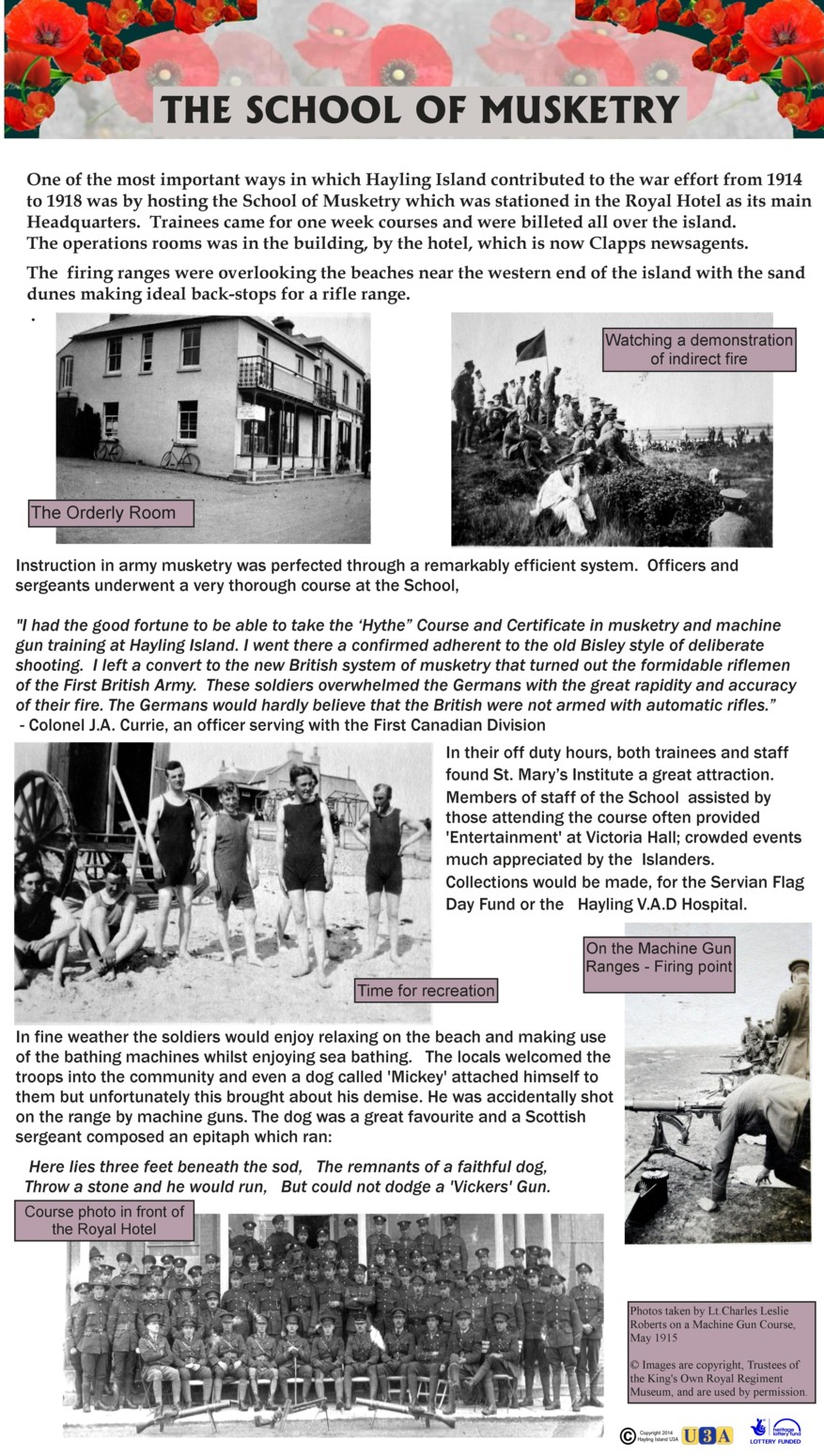
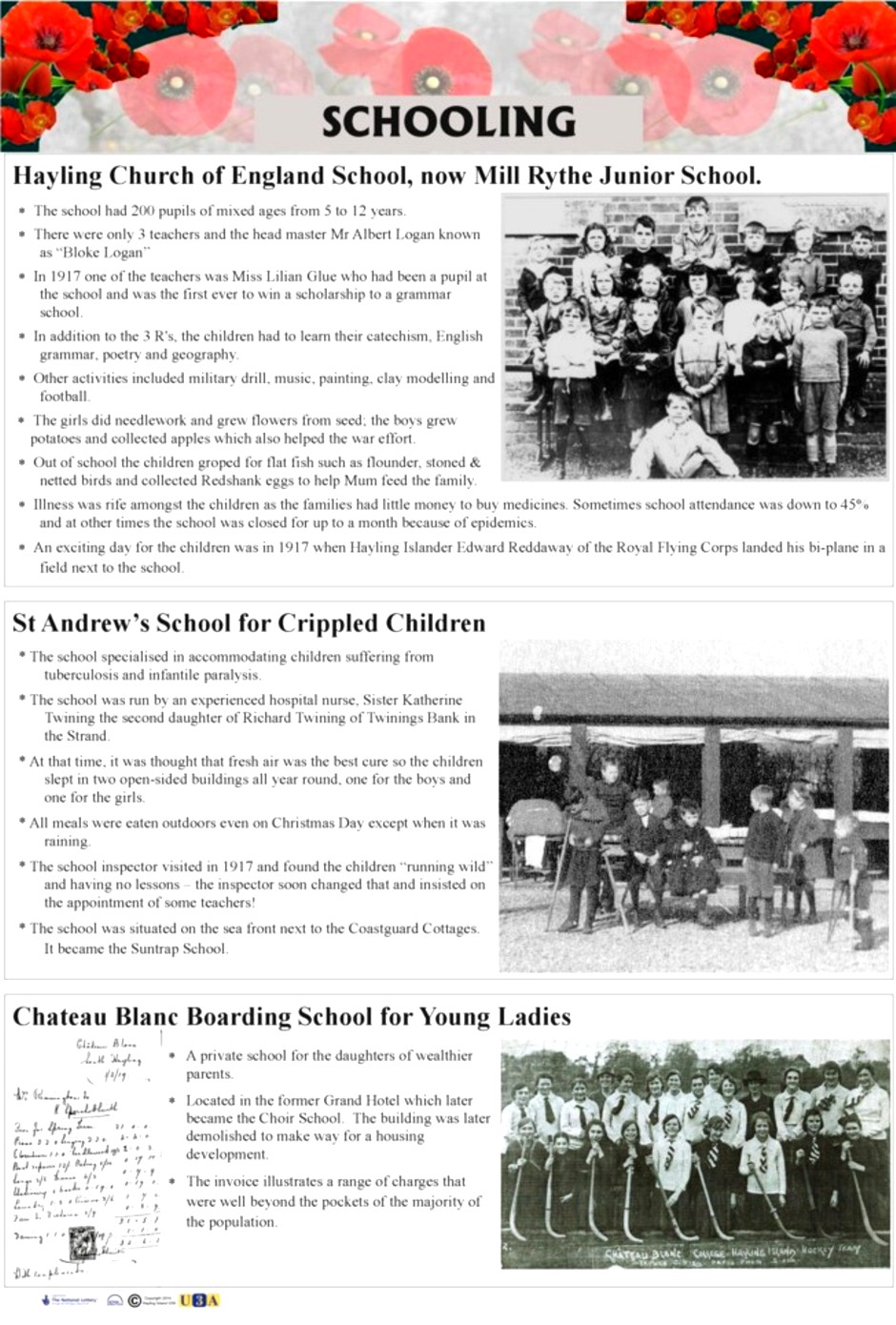
The “School of Musketry”, “The VAD Hospital”, “The Contribution of Hayling Women”, “Food Production on the Island” and Hayling Schooling” all featured on the information boards as did a display of WWI postcards and a feature on Medals. That all was not always well at home, and suspicion and paranoia reigned at times, was reflected in a letter to the Parish Magazine from an aggrieved couple asserting that, contrary to public opinion, they were not and never had been agents of the German Empire threatening action for libel against the rumour-mongers.

A questionnaire about items in the Exhibition was widely utilised and enjoyed by the children; a table of WWI balaclavas, socks, gloves and mittens fascinated them and some of the civilian artefacts on the table of items from the home caused mystification: especially the do-it-yourself cobblers last that many thought was an anchor; and the flat irons that several thought might have been heated in the microwave oven!

Paintings, photos, artefacts, posters and displays were all brought together in an extraordinarily effective presentation of Hayling at War. The inclusion of an amazing set of WWI artefacts was due to the extraordinary generosity of Peter Everard, who has been an ardent collector for many years.

The rather lovely, delicate, 1909 Edwardian wedding dress for Sarah, obviously a petite and pretty lady on the day of her wedding with Hayling baker Frederick Peacock, sadly to lose his life, but weeks before the end of the War leaving her with three young children to bring up, contrasted with the brutal formality of the military uniforms: formal Official letters contrasted with poignant notes to home: and menacing, deadly weapons of war contrasted with the crucifix fashioned from a bullet case and bullets with an exquisitely carved miniature of the Christ figure found in the mud at Passchendaele. Was it British, French, German? But representing a common humanity and hope in the depths of the muddy man-made Hell.

War in its sheer brutality in battle with the equal burden of shortages of food and fuel, and endless hard work endured by those left at home, largely the ladies and the children, was displayed with cool clarity: but with the amelioration of the triumph of the human spirit above the callous carnage shining through.

This was an exhibition demonstrating research of professional standards allied to design and presentation skills of the highest quality. It was an exhibition where respect and admiration for all the Hayling Islanders involved in the War, home and abroad was shown in abundance.

exhibition3The exhibition was without triumphalism. It was affectionate, respectful and commemorative of our Island’s forebears.
With contributions from many groups within our U3A, the team of Thelma Cook, Karen Walker, Bryan Bowen and Peter Hill initially led by Derek Drew and then by Paul Chapman when Derek moved off the Island, produced an Exhibition at least the equal, if not better than those set up by professional curators in public museums and galleries. It was the outcome of devoted commitment, sheer hard work and the application of admirable skills honed over many years. The picture on the right shows the exhibition team with the Lord Mayor of Havant.

The Exhibition was a triumph and I am certain that every member of the U3A will join me in offering the team our unbounded congratulations.

Derek Dunn

The Exhibition Stewards

The Exhibition Organising Team would like to acknowledge the tremendous assistance provided by the members of the Hayling Island U3A who volunteered to undertake steward duties. The exhibition was open for a total of 90 hours and at all times there were at least two stewards on duty. Their presence allowed the public and the school children to gain more benefit from their visit, facilitated the sale of many books and ensured that all the exhibits remained in situ! In general, the stewards found that the duty period was not a chore but instead a fascinating interchange with the many members of the public who wished to discuss their own family involvement in WWI and witnessing the minds of children attempting to comprehend the full implications of the exhibition.

'Life and times' exhibition posters

Exhibition posters

At the 'Life and times' exhibition we displayed posters describing:

  • key events in each of the years 1914 to 1919
  • those who fell in the war
  • important topics for the period

We reproduce those posters below...

Key events

Click any link to see the associated poster...

1914
1915
1916
1917
1918
1919

The fallen

Click here to see our list of the fallen.

Hayling Islanders during the war

Click any link to see the associated poster...

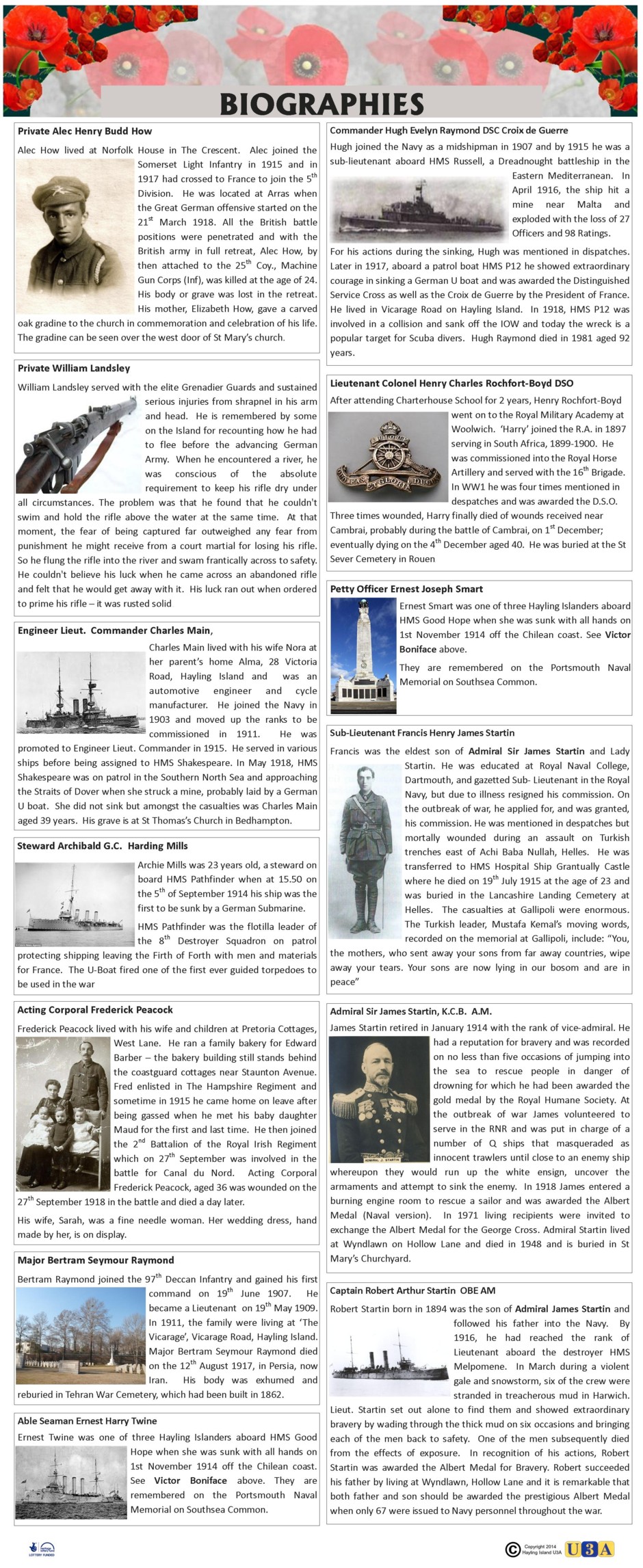
Biographies poster 1
Biographies poster 2
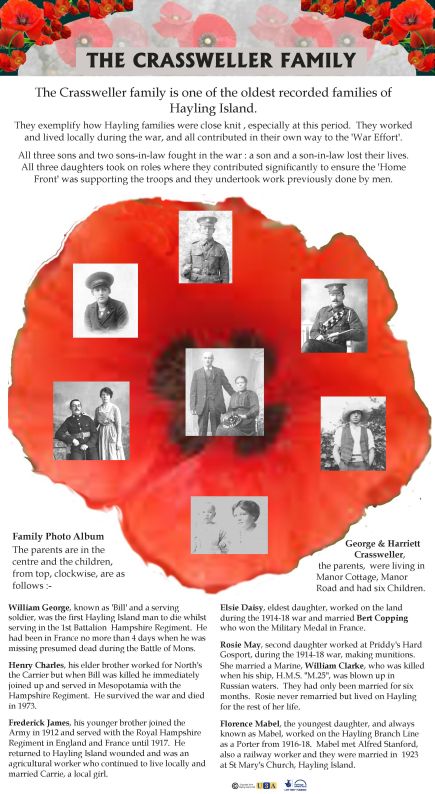
The Crasweller family
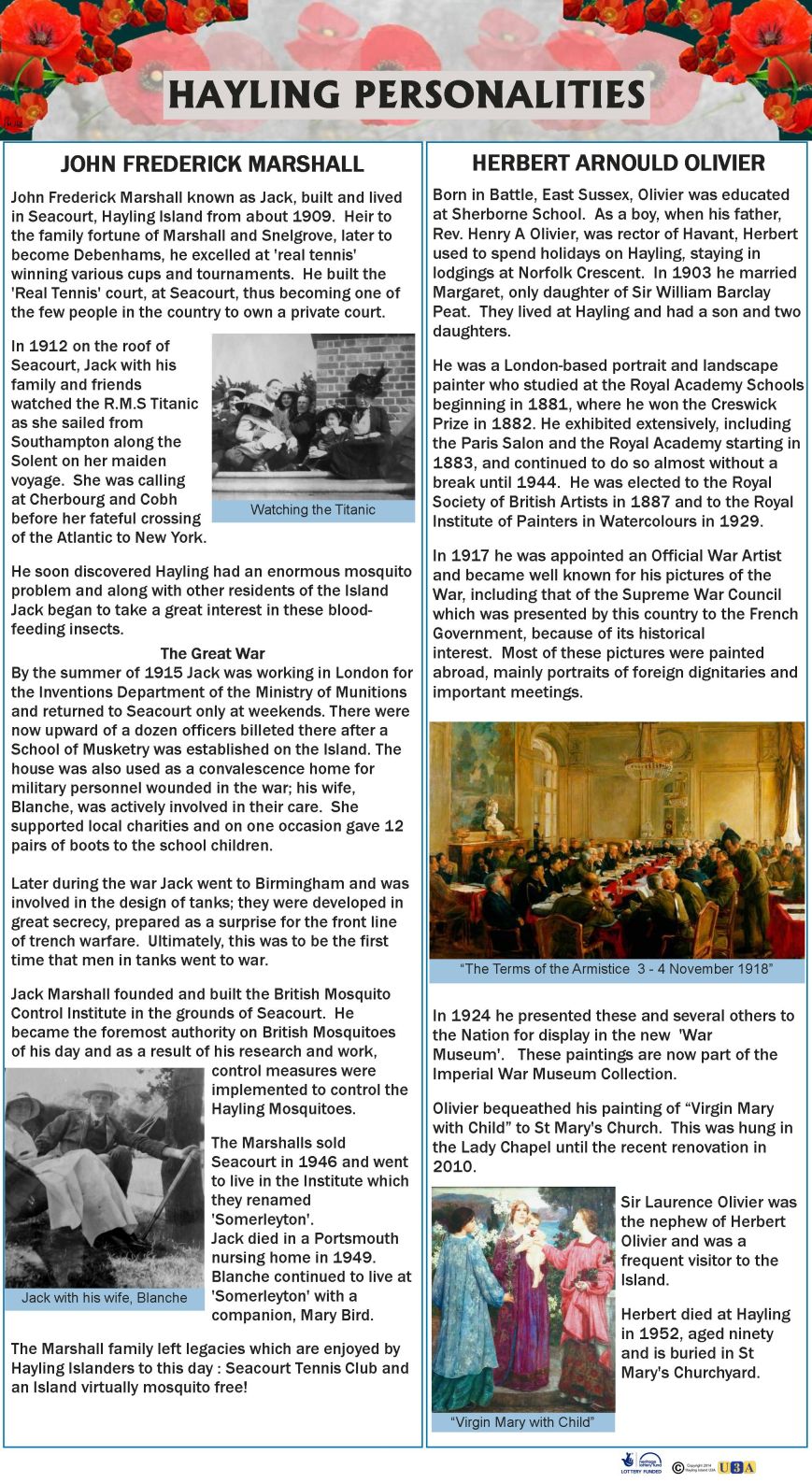
Prominent Hayling civilians

Hayling at war

Click any link to see the associated poster...

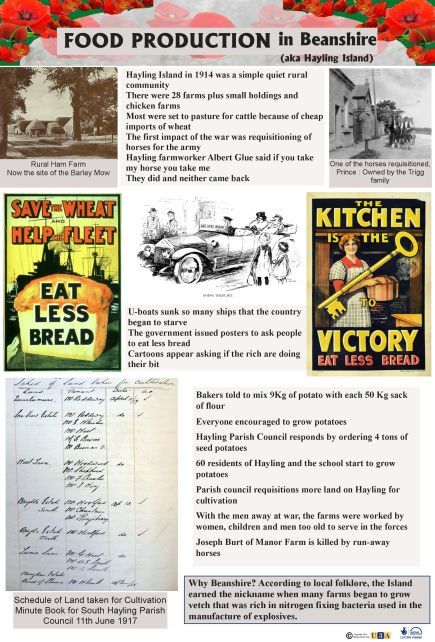
Farming
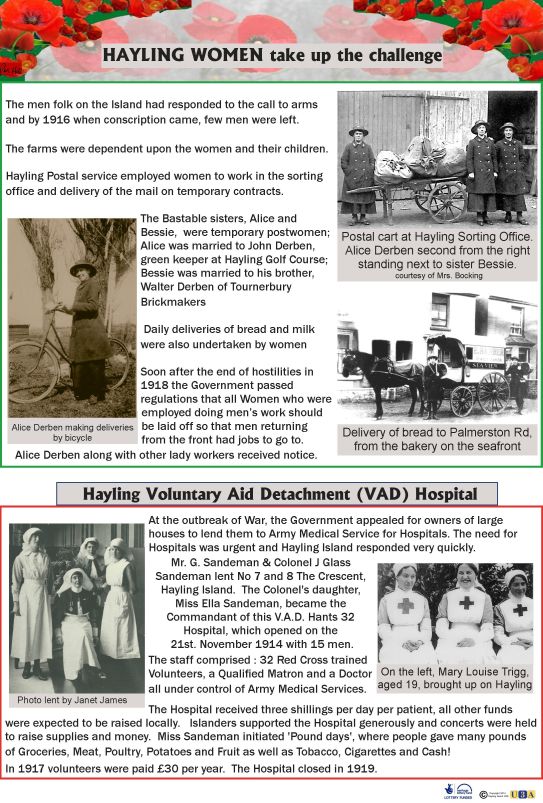
Women at war
School of musketry
Schooling

About the war

Click any link to see the associated poster...

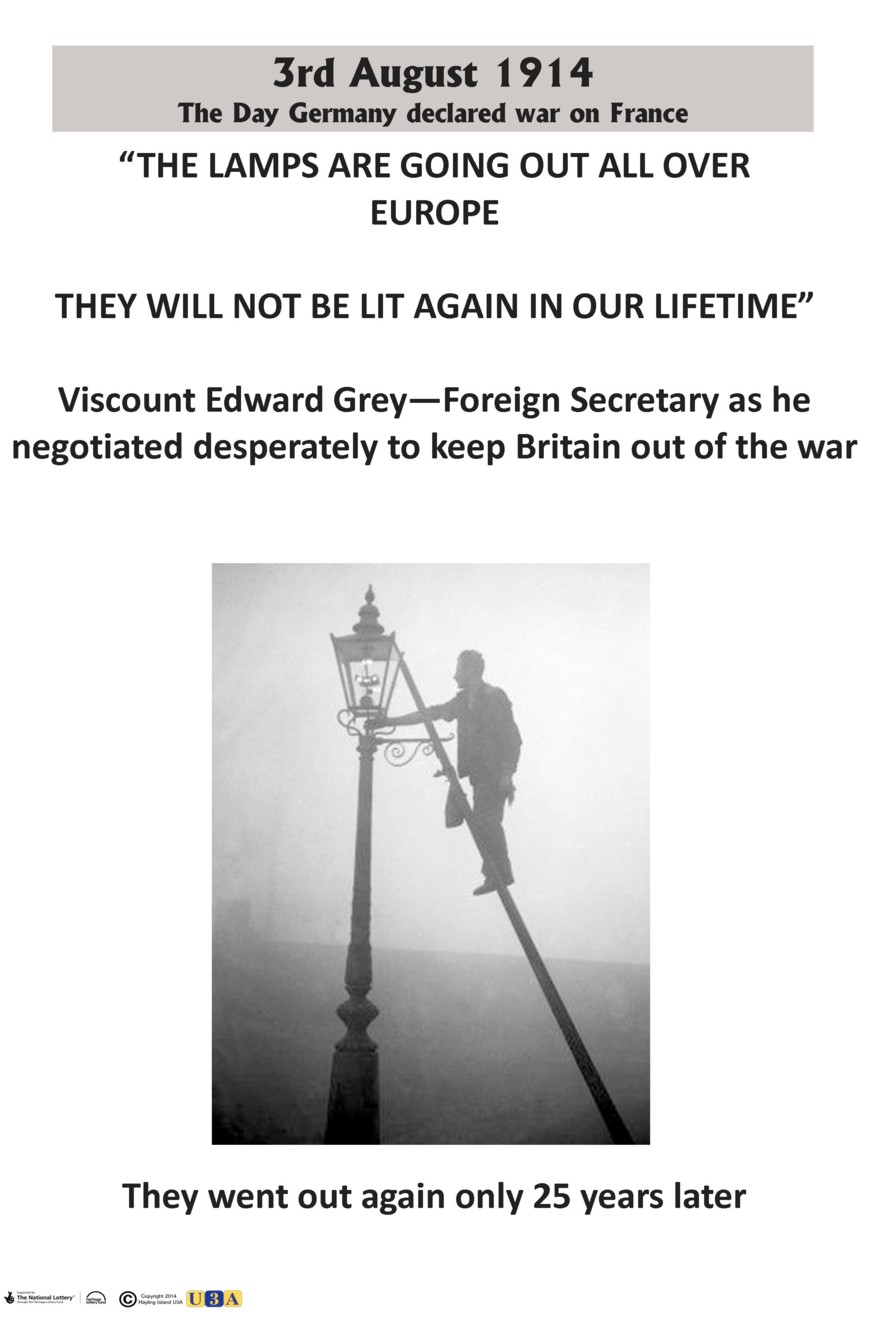
Premonitions
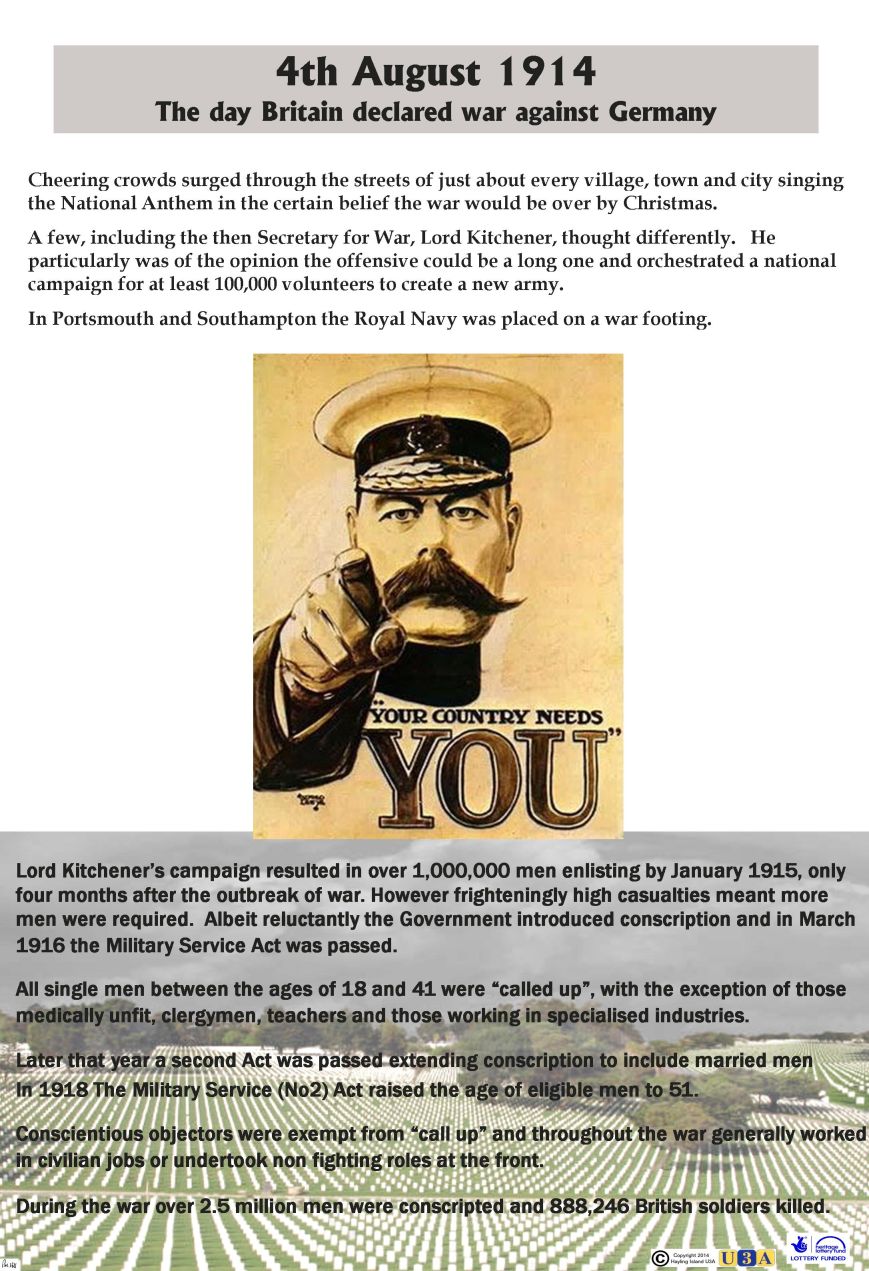
Mobilisation and casualties

Group report

This is an article published in the Summer 2017 edition of the Hayling Island U3A newsletter...

This group is now meeting on a more regular basis and, conveniently, at the end of term has completed all of our book 2 Songs and exercises. We have also progressed onto duets and will begin book 3 in the autumn.

This year we have welcomed 2 new players into 'Windsong'.

Many thanks to Joan Doney who usually hosts the group and cooks the most delicious cakes for break time.

This group is now full.

Group report - annual review

This is an article published in the Summer 2017 edition of the Hayling Island U3A newsletter...

Over the past 12 months we have been fortunate to have new walk leaders - Sonia, Jorj, Pam & Barbara. Those of us jaded by this beautiful countryside have been treated unexpectedly to new walks, thanks to these members. Not least of the surprises was Jo's walk at Catherington - so new, so close, so rural.

So gentlemen - where are you ?

The Year started with a walk in freezing fog at Hilsea Lines, where we gave unplanned interviews to a television film crew - some of us have been on the BBC & ITV news! New too was the brief excursion around the Lido, to see a device for giving youngsters practise at kite-surfing.

Last August Jorj led us on a walk from the Jane Austen village of Chawton to that astonishing building at Upper Farringdon - Massey's Folly. Sonia found us a new starting point for the route up St. Roche's Hill to the primroses - and a new place to lunch.

So gentlemen - where are you ?

If there is a member that would like to lead/share walks on a day other than a Monday, and possibly slightly longer at 6-7 miles, then please let me know. I have this belief that to keep both fit and sociable that HIU3A needs to be walking several times a month - though my knees may grumble.

Bryan Bowen

Group report - Droxford May 2017

This is an article published in the Summer 2017 edition of the Hayling Island U3A newsletter...

At the lunch held in early February to discuss the walks for the year, it wasn't so much as "volunteer" but a "not so gentle push" to become leaders for the Droxford walk!

Pam and I took it in our stride (as it were!!) and set off on a cold and damp day in April to do a recce walk. Armed with instructions and a map from a previous walk - and making sure I had my pedometer attached - we set off from Droxford Church. I guess it's ok if you have a good sense of direction, know your east from your west, and can read a map!! However, if all of these escape you then it can be dangerous!!! Our first attempt took longer than anticipated - due to the fact we misread instructions and went several different ways to get back on track! The pedometer reading was therefore worthless as we walked much farther than we meant to!

We decided to taste test The Bakers Arms (a gastro pub); after paying an extra £3 for a few small pieces of bread to go with a bowl of soup, it was decided to find an alternative venue. Also, they charged a £10 per head booking fee... they were crossed off the list straight away!

This necessitated a second recce of the walk a few weeks later - and this time although we started and finished at Droxford Church, we then had to drive to our designated pub - The Hurdles - a walker, cyclist and dog friendly pub. (Starters £4; all "home comfort" mains £10. with a dairy and a gluten free menu.) This then was our choice to have lunch in at the end of the walk.

A week or so before our "big day", Pam and I had a third recce: rather than starting at Droxford Church - we decided it would be far more sensible to actually start and finish at The Hurdles. But, still undetermined was the length of the walk and how long it would take in all !

Beginning with a short history lesson, the walk started across the road from The Hurdles on the old Meon Valley railway line which ran from Alton to Fareham during the first half of the 20th century. The line had stations at several of the Meon Valley villages, including Droxford, which boasted the longest siding in southern England.

It was in this siding that an event took place to finalise the plans for the biggest invasion force ever massed by the British military, the D-Day landings.

On the 2nd June 1944, Winston Churchill, members of his war cabinet, President Eisenhower and the French leader Charles de Gaulle, the Canadian President William Lyon McKenzie King and the South African leader Jan Smuts, all met on the Royal train, in the siding at Droxford. Tens of thousands of troops were already camped throughout the area, preparing for the invasion of France. The leaders went on a morale boosting visit to the troops and then returned to the train to hold last minute talks about the invasion plans.

Droxford station was chosen as the meeting point because of its proximity to the troops, its secluded siding and proximity to a deep cutting. It was thought that in the event of an attack, the train could be pushed into the cutting, where it would be hard to see. The beautiful station building is now a private residence and a humble little plaque is all that remains to remember the momentous events played out in Droxford.

On the walk we encountered a small herd of young heifers, one of whom took a liking to Pam and started to follow her - maybe it was the smell of her sunscreen! Then we came across a flock of sheep sheltering under a large oak tree - all looking at us with astonishment (as they do) and not a baa between them! The last field to cross held 2 Shire horses, eating grass contentedly until they spied our group making towards them - then one of them trotted over to the stile and just stood there - I think waiting for some mints! A bit scary if you don't fancy horses....!

And so, over a cold drink and some good food, it was finally decided that we had walked 5.2 miles which took 2hrs 20 mins. Next time it will be a breeze .....!

For those intending to become a walk leader - remember that all walks leave from the Community Centre at 0915 and not 0930 ....!

Happy walking.

Barbara Nixon

Group report

This is an article published in the Summer 2017 edition of the Hayling Island U3A newsletter...

If diversity be the spice of life then we have very spicy meetings in the Science and Technology Group. This last term has witnessed talks about the "Complexities of Excel", "The source of Hayling's water", "Lifeboat design" and "Electricity - will the lights go out?" Already planned on dates to be advised we have "System Analysis", "MS-Access" and "Container control Systems".

Most of our talks are given by U3A members who have joined the S&T group. But given that our overall membership is now above 480 there must be many in our U3A who have had a lifetime involvement in a technology related business and have a story to tell. Sharing your expertise is a very rewarding experience and I look forward to receiving some volunteers to add to next year's programmes. An additional reward is the presentation of a bottle of wine!

Our meetings are held on the 4th Wednesday of each month in St Patrick's Church Hall at 2.30 pm and are open to all members of the U3A for a small fee towards the cost of the hall hire.

Group report

This is an article published in the Summer 2017 edition of the Hayling Island U3A newsletter...

We are just reaching the end of this year’s programme doing a "sporting action" picture using ink as the medium.
We are just reaching the end of this year’s programme doing a "sporting action" picture using ink as
the medium.

We enjoy learning from each other and having a relaxed morning of painting and chat ! We meet on the fourth Friday morning of the month at Radford Hall. There is usually 8-10 of us, so plenty of room for more.

We have all put ideas together for a varied programme for 2017/2018, which includes trying different techniques, mediums, challenges, to develop our skills rather than produce lots of masterpieces....but we do get some!!

Group report

This is an article published in the Summer 2017 edition of the Hayling Island U3A newsletter...

The Group continues to explore a variety of music from less well known composers as well as the more famous.

This year we have studied music by Mozart including features that we didn't know about him e.g. Mozart's music has been credited with helping those with epilepsy, boosting the milk production of cows, and boosting the IQ of unborn babies. A Swiss sewage treatment centre has now claimed that Mozart can help microbes break down sewage waste, the Centre's preferred composition being The Magic Flute! We have also looked at compositions by Shostakovich, Paganini, Willem Hendrik Zwart, a Dutch organist and composer, William Bolcom, an American pianist and composer and the works of the English composers Sir Edward Elgar, Sir Arnold Bax, Sir Granville Bantock, Ivor Gurney and George Butterworth. We have also studied the woodwind instruments in detail.

The musical interests of the Group are wide and varied and any member who would like to join us will be most welcome.

We meet on the 4th Friday of the month at 2.00pm

Contact either Sue Humphrey or Maura Chapman

Group report

This is an article published in the Summer 2017 edition of the Hayling Island U3A newsletter...

The group has undergone some changes recently, with two of our long established members deciding to leave us, after ten years! We have enjoyed their company and input to the group and wish them well.

The vacancies were soon filled and we welcome Peter & Diane who are both very interested in local history.

We had planned a visit to the Novium Museum at Chichester to view the Tim Peake exhibition plus details of recent excavations in the district, but that has had to be put on hold for a later date.

So far this year we have looked at the history of the Lifeboat Service on Hayling, heard first-hand about life in the WRENS, from a former member, and recently we have been investigating Hayling Island businesses and in particular where they were (or are!), from old photographs, books and members' memories.

The Island has been unique in its self-sufficiency unlike a city or suburb with almost every occupation and activity happening within a small area, and involving local people.

Hopefully the expected influx of new residents will not change the character of Hayling Island.

Brenda Cotten.

Group report

This is an article published in the Summer 2017 edition of the Hayling Island U3A newsletter...

Apart from the regular brick-wall sessions whereby we use our collective brains to resolve an impasse that a member has reached in the development of a family tree, we have investigated the conditions under which our ancestors lived. We selected a period 1820-1850 and each member of the group undertook to research the developments in a range of conditions such as Politics and Voting, Medicine, Industrial Development, Philosophy, Punishments, Transport and Investment, Growth of Empire, Social and Living conditions, Science, Finance and Wages, Agriculture, Communications and Entertainment.

It has been a fascinating exercise and our ancestors experienced a rate of change in their lifestyle that was just as radical as it is today driven by the development of the steam engine and the fear that the spirit of the French Revolution might cross the channel!